
Growing tips
Here are the substrates and conditions we use for our plants, based on our experience. They are a starting point: each species has its own needs, so look into its natural habitat to fine-tune your growing conditions.
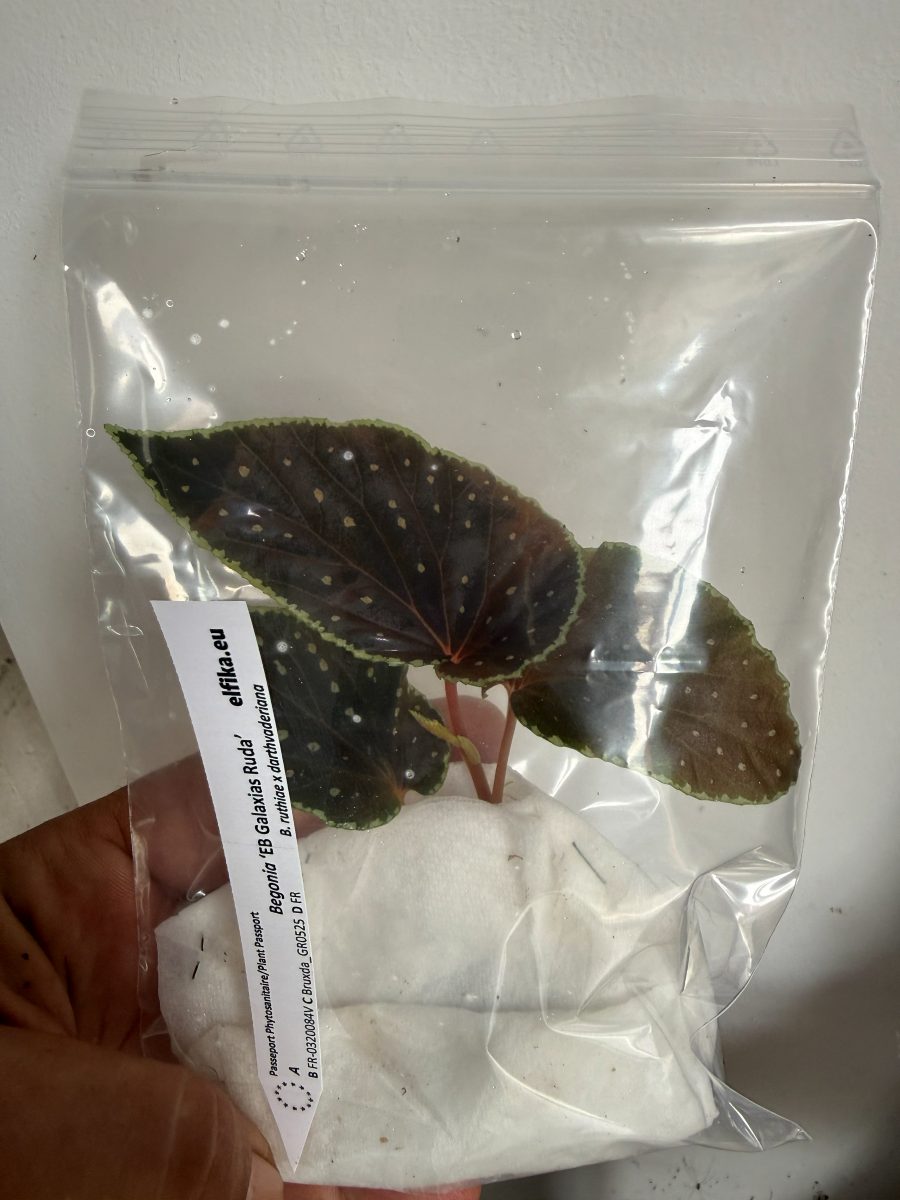
A plant as you receive it.
Your plants are shipped bare-root, without pot or substrate: prepare your substrate before they arrive. See also our Order receipt page for acclimatisation.
For most of these plants, high humidity is essential: a terrarium, cloche or clear box that lets light through and keeps the air humid.
Contents
- Recommended mixes at a glance
- Substrate components
- Begonia and Emblemantha
- Epiphytes: Platycerium, Lecanopteris, Drynaria, Medinilla
- Araucariaceae: Araucaria, Agathis, Wollemia
- Carnivorous plants: Drosera, Dionaea, Sarracenia, Cephalotus, Heliamphora, Utricularia, Nepenthes
- Live sphagnum and top dressing
- Nutrients and feeding
- Where to grow
Recommended mixes at a glance
| Begonia from mineral soils sections Coelocentrum, Platycentrum | 60-70% coarse akadama + 30-40% sterilised potting soil Substrate may dry a little between waterings, shade. |
| Understory Begonia and Emblemantha especially section Petermannia | 50-60% dead sphagnum + 30% sterilised potting soil + 10-20% kanuma Constantly moist substrate, high humidity, shade. |
| Begonia daunhitam, B. darthvaderiana | Peat and sterilised potting soil + 20% kanuma The mix that works for them here. |
| Epiphytes Platycerium, Lecanopteris, Drynaria, Medinilla | Organic, rich, free-draining substrate Fairly high humidity, bright light. |
| Araucaria and Agathis | Potting soil + porous draining components (perlite, akadama, kanuma) Species from ultramafic or lateritic soils: add iron-bearing components (seramis, akadama). |
| Wollemia | Equal parts potting soil and peat + 20% perlite or kanuma Rather acidic and moist, hardy to -10 / -15 °C. |
| Drosera, Dionaea and Sarracenia | Peat + perlite or sand, about 50 / 50 (depending on species) Very bright light, except Drosera of the prolifera / adelae / schizandra group. |
| Cephalotus | 90% perlite + 10% peat, with 1-2 cm of peat on top Bright light, always moist but very free-draining. |
| Heliamphora | 90% perlite + 10% peat, with 1-2 cm of peat and live sphagnum on top Maximum light, 22-26 °C by day, 10-15 °C at night. |
| Epiphytic Utricularia | U. cornigera: peat + perlite or sand U. nelumbifolia, U. humboldtii: sphagnum + perlite, live sphagnum on top |
| Nepenthes | Epiphytes: 80% small coco chips + 20% kanuma Rocky habitats: 80% akadama and kanuma + 20% small coco chips Intermediate habitats: about 50% organic, 50% mineral High humidity, especially at night; bright light. |
Sterilise potting soil before use (in a bain-marie, for example) to avoid bringing in pests. "Peat" means light sphagnum peat (blonde peat).
Substrate components
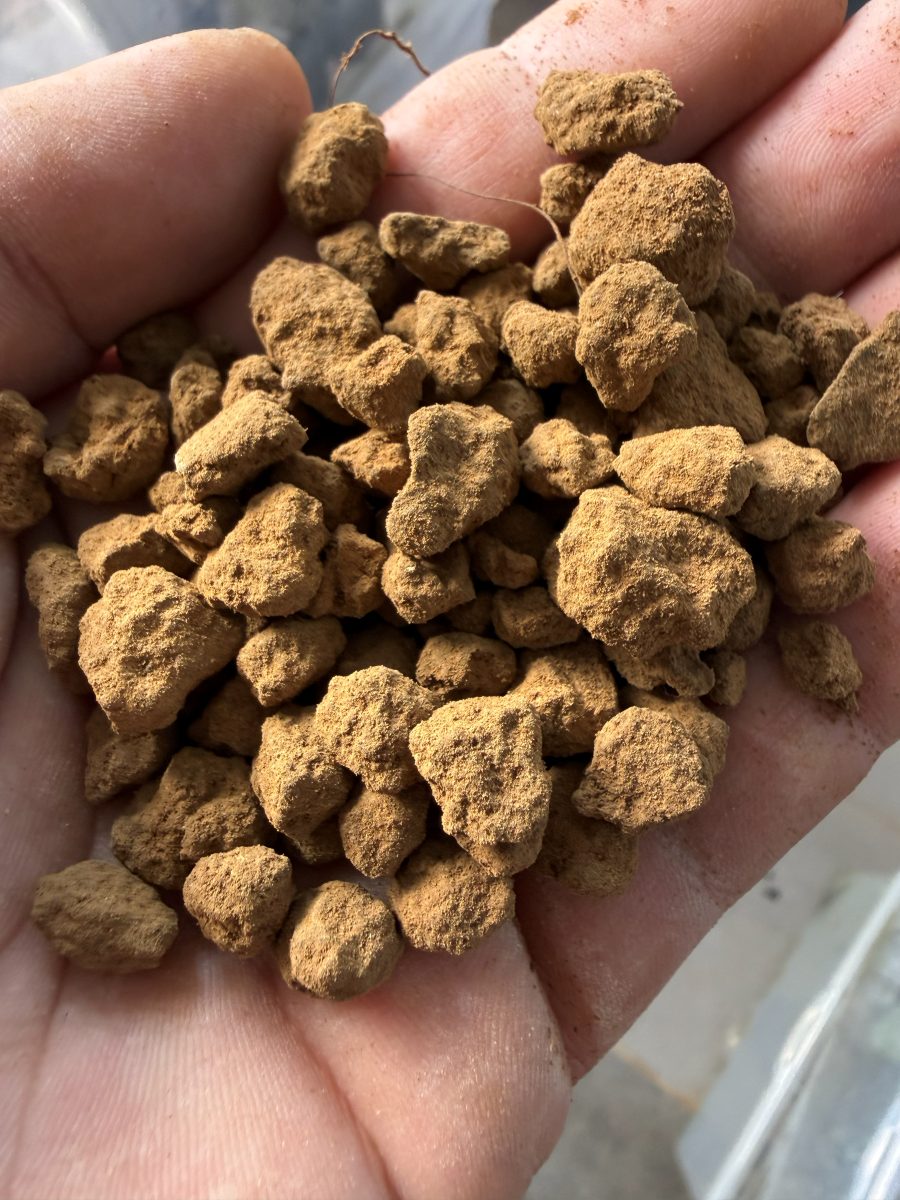
Coarse akadama: granular Japanese volcanic clay, porous, free-draining and iron-rich.
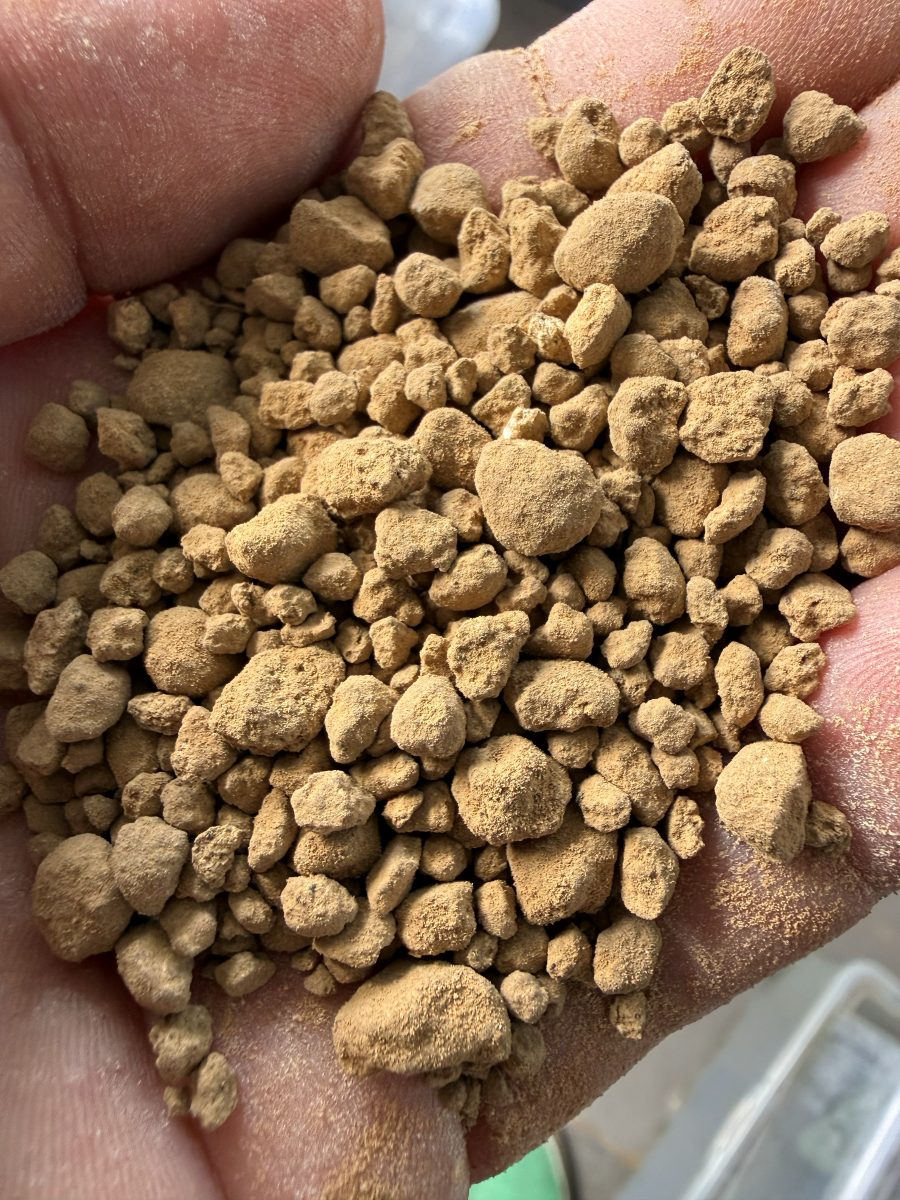
Medium akadama: for small pots and young plants.
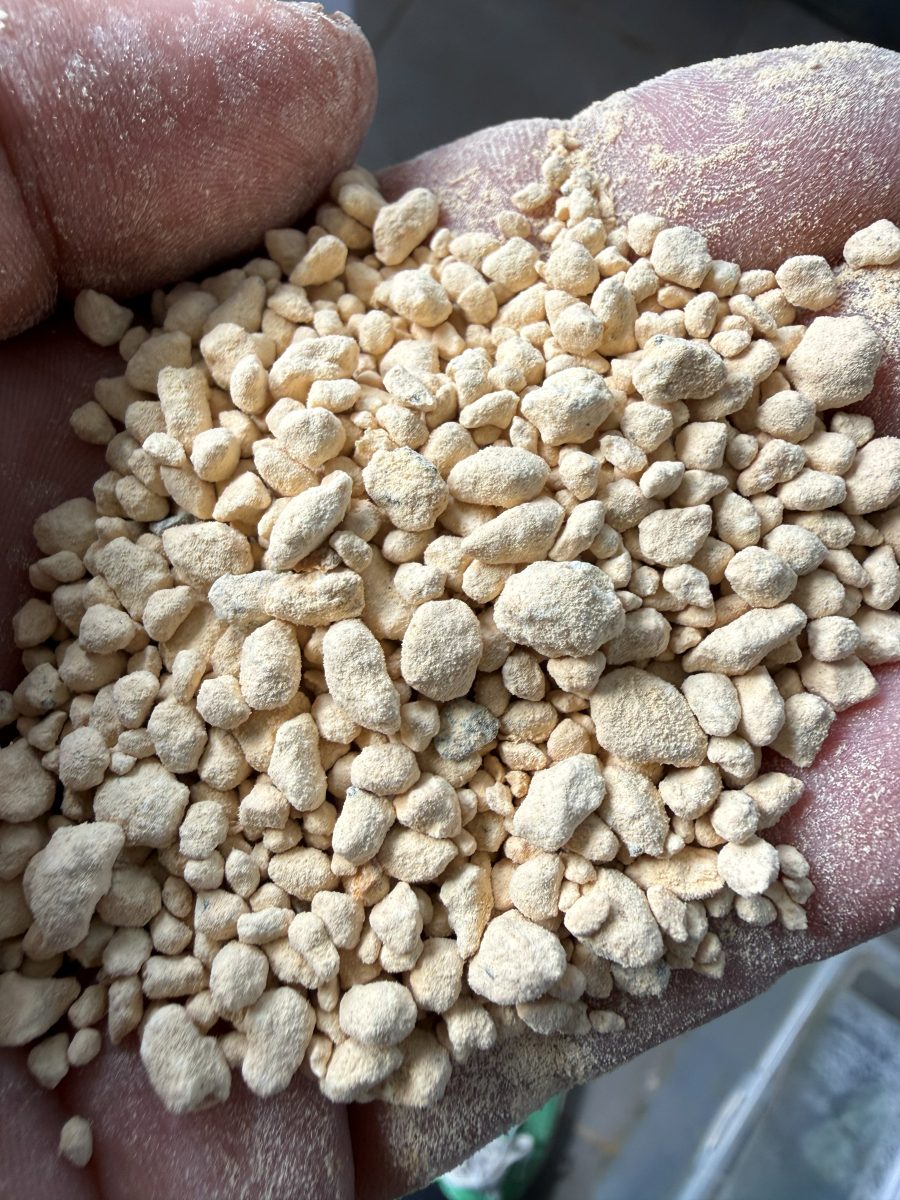
Kanuma: light, acidic volcanic pumice that aerates the mix.
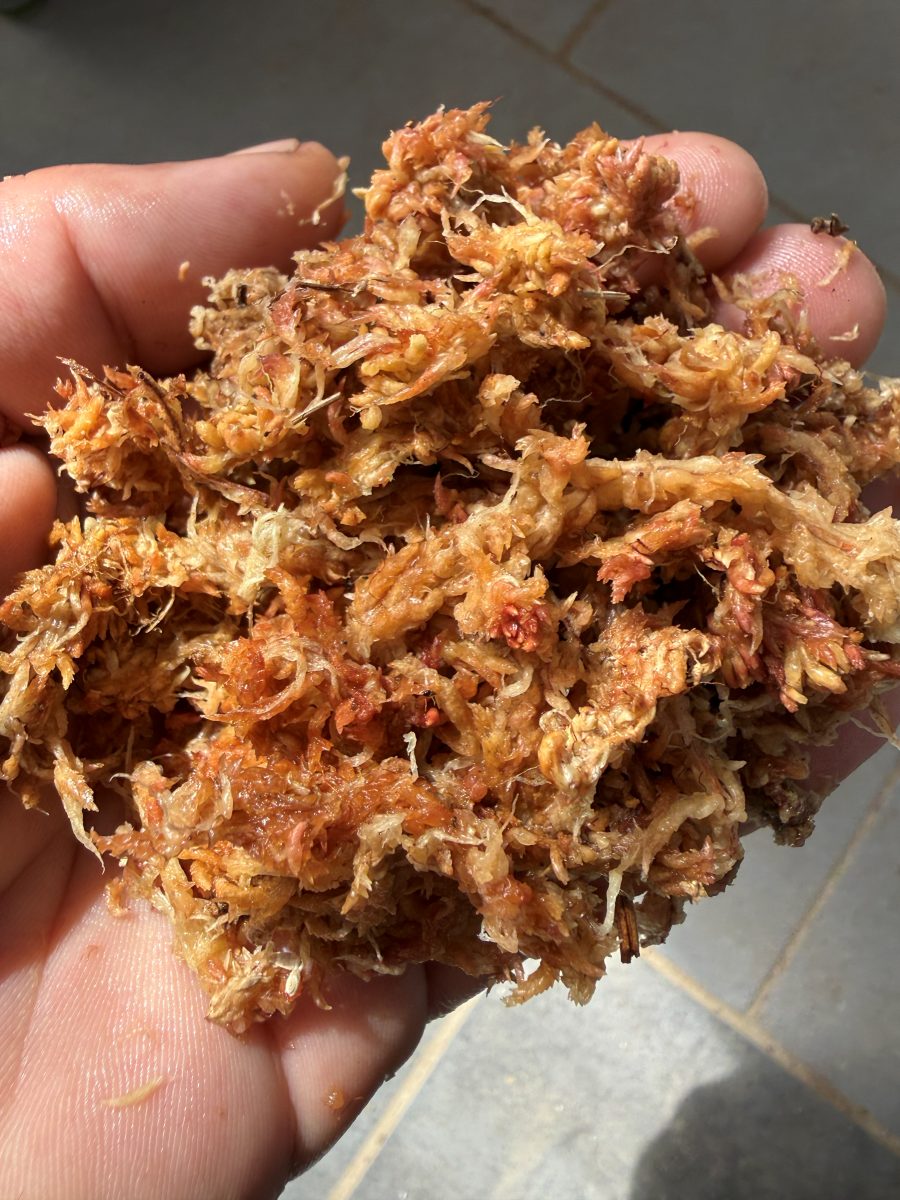
Dead sphagnum: holds moisture while staying airy.
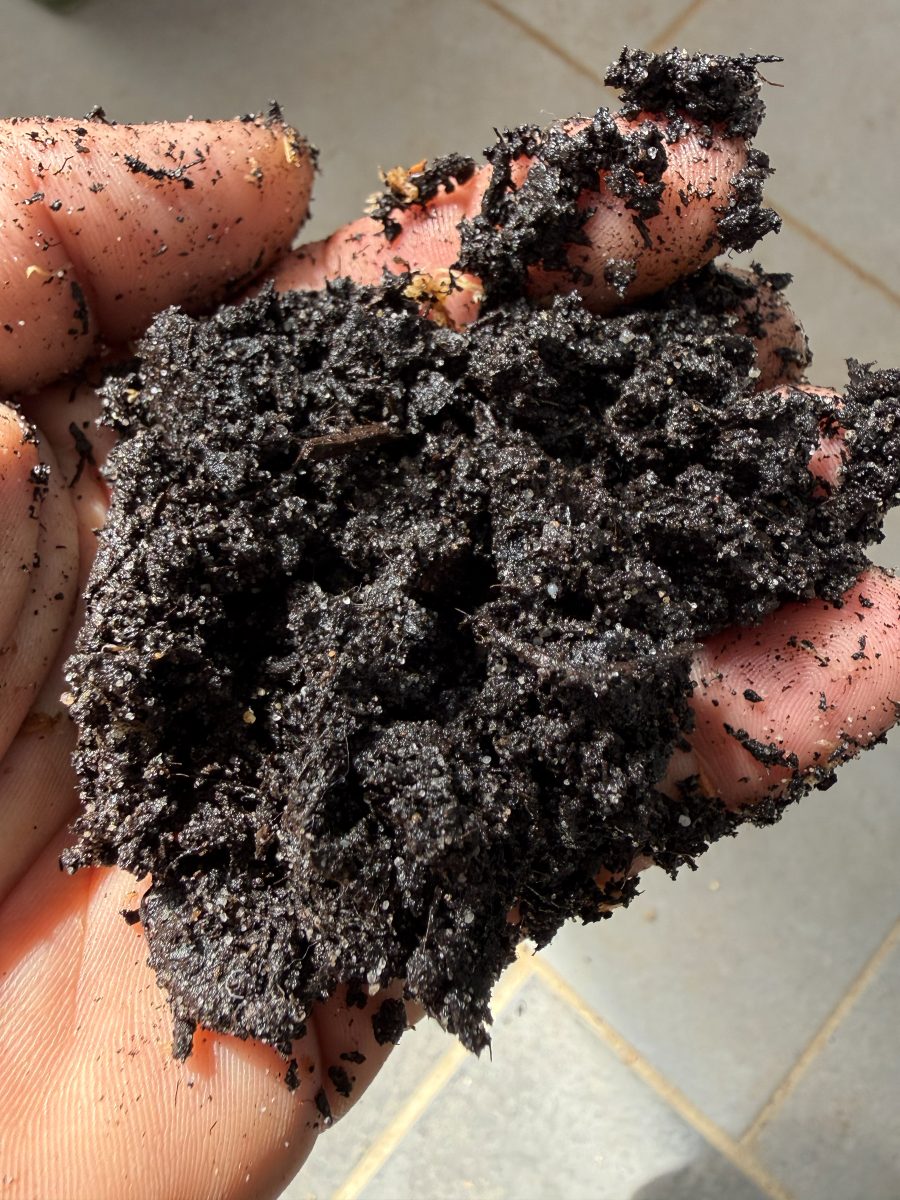
Potting soil: the rich part, to sterilise before use.
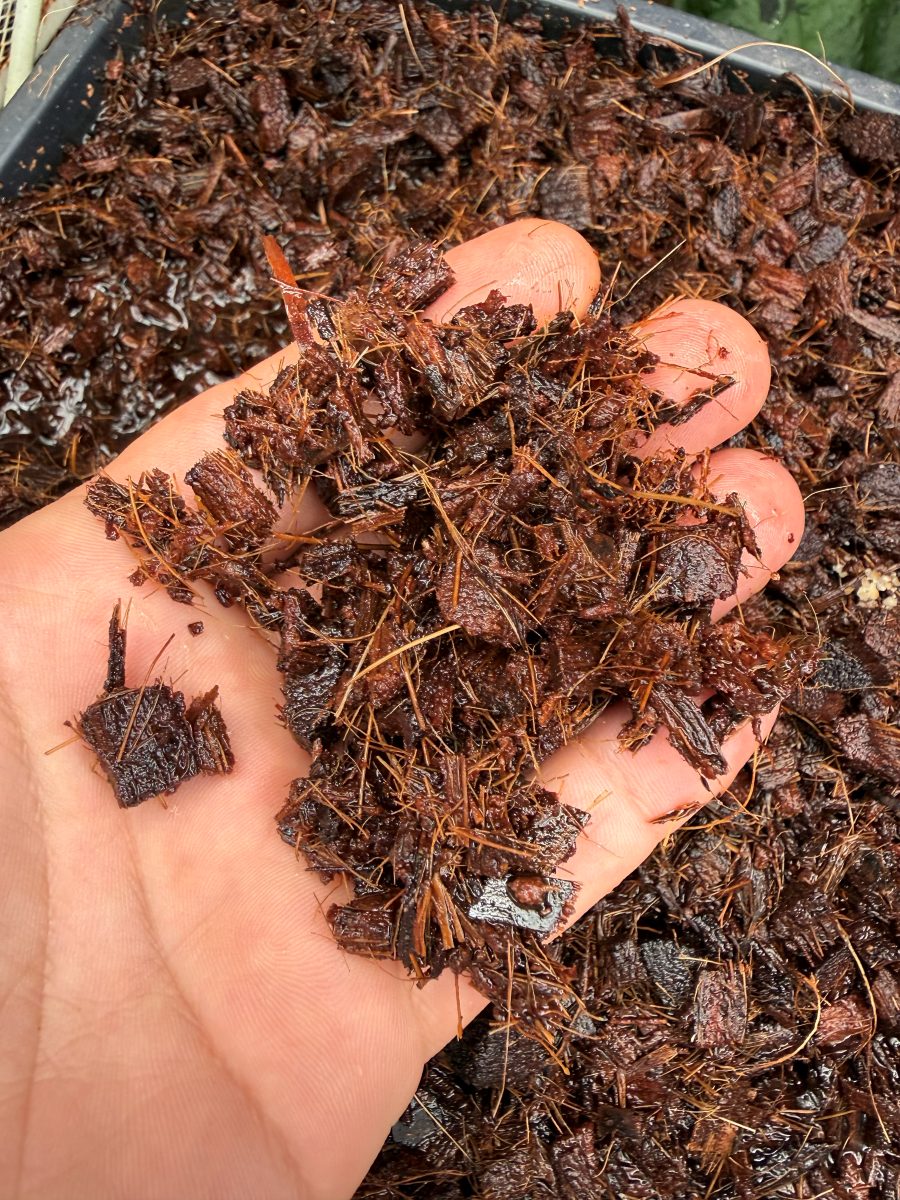
Coco chips: long-lasting, airy organic base (Nepenthes, epiphytes).
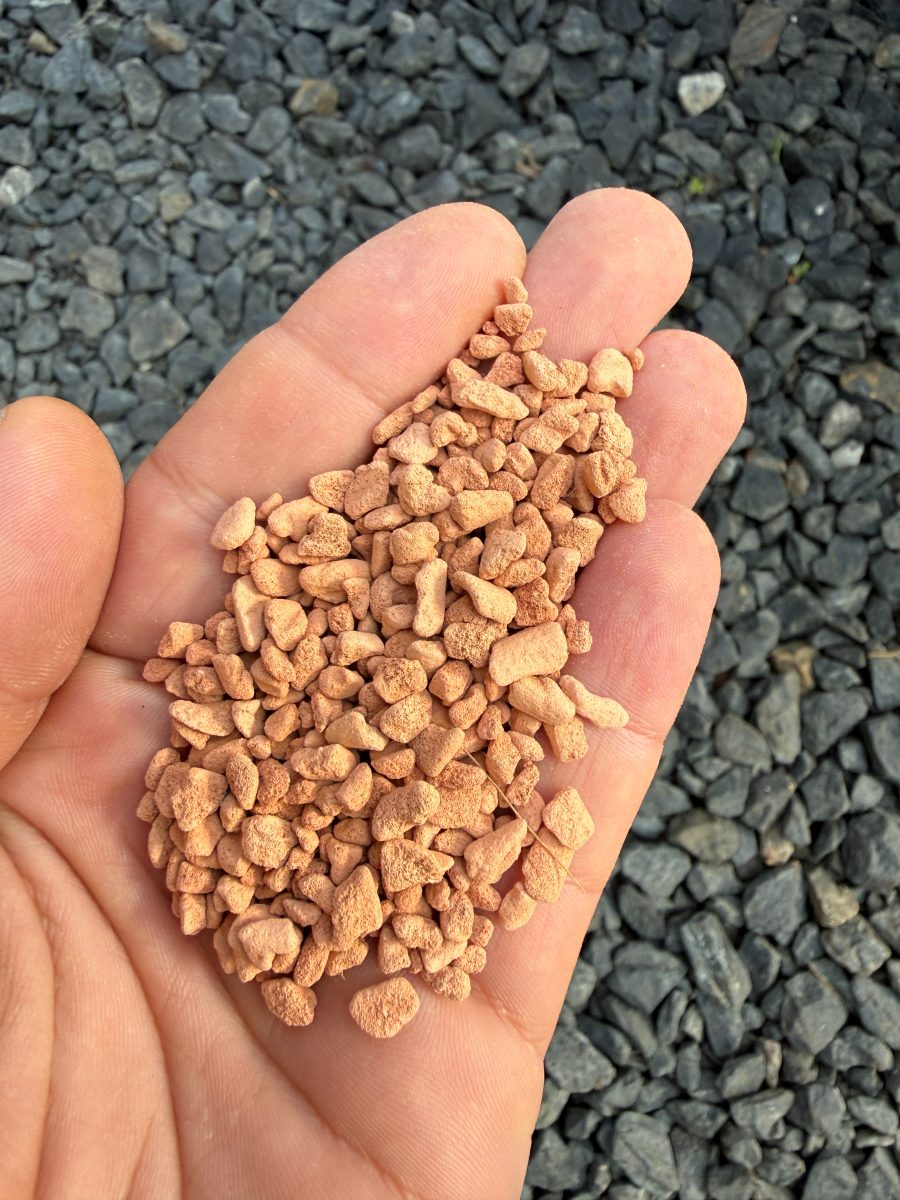
Seramis: porous clay granules containing iron.
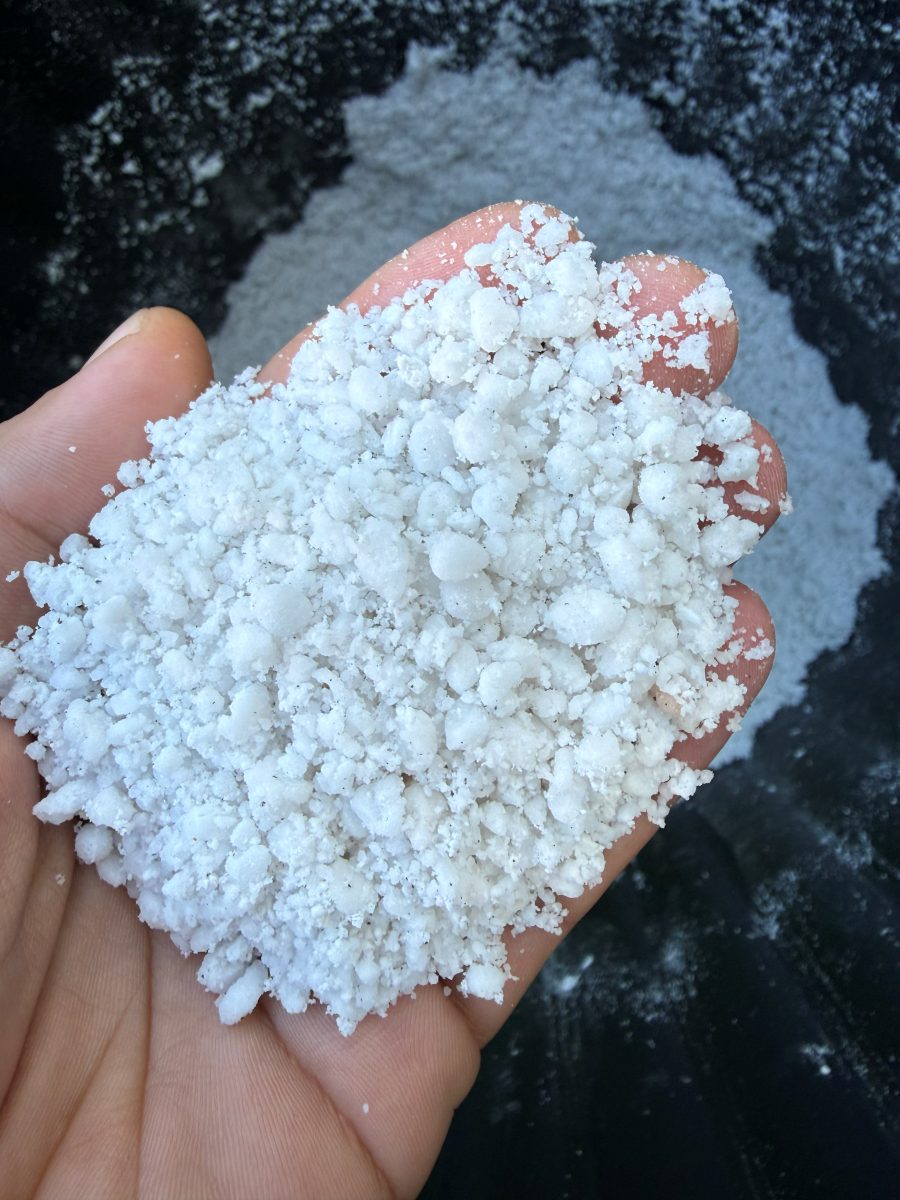
Perlite: expanded volcanic rock, very light, lightens and drains.
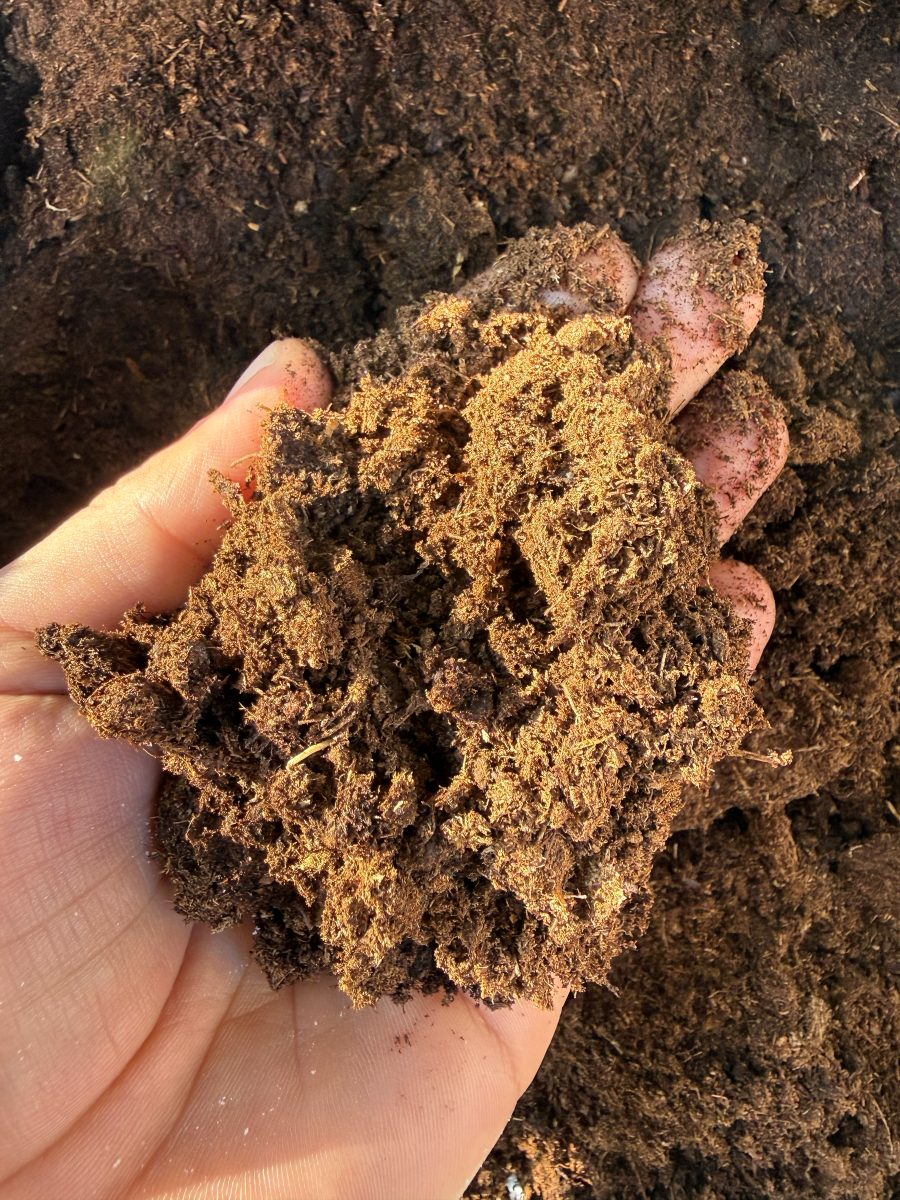
Peat (blonde): acidic and poor, the base of carnivorous plant mixes.
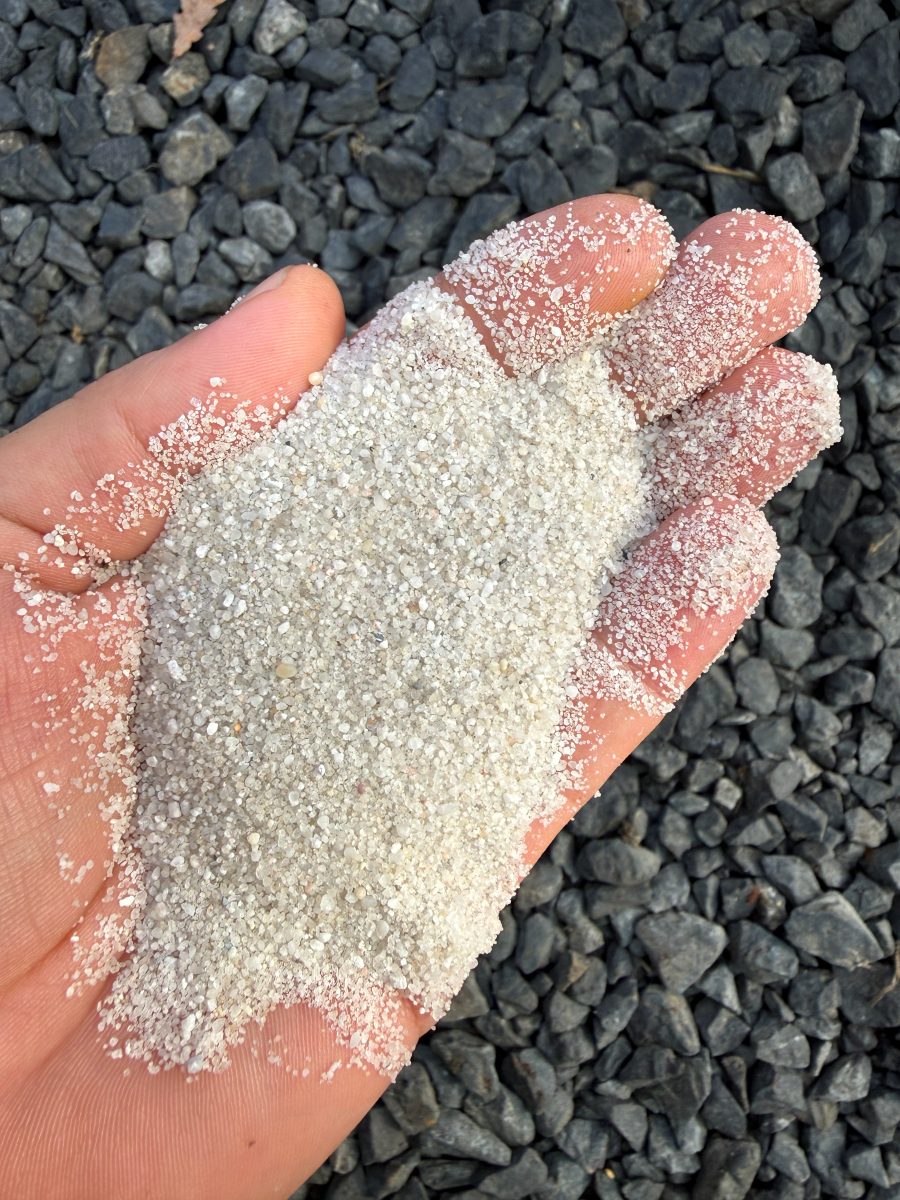
Silica sand: drains; used as top dressing for Drosera.
Begonia
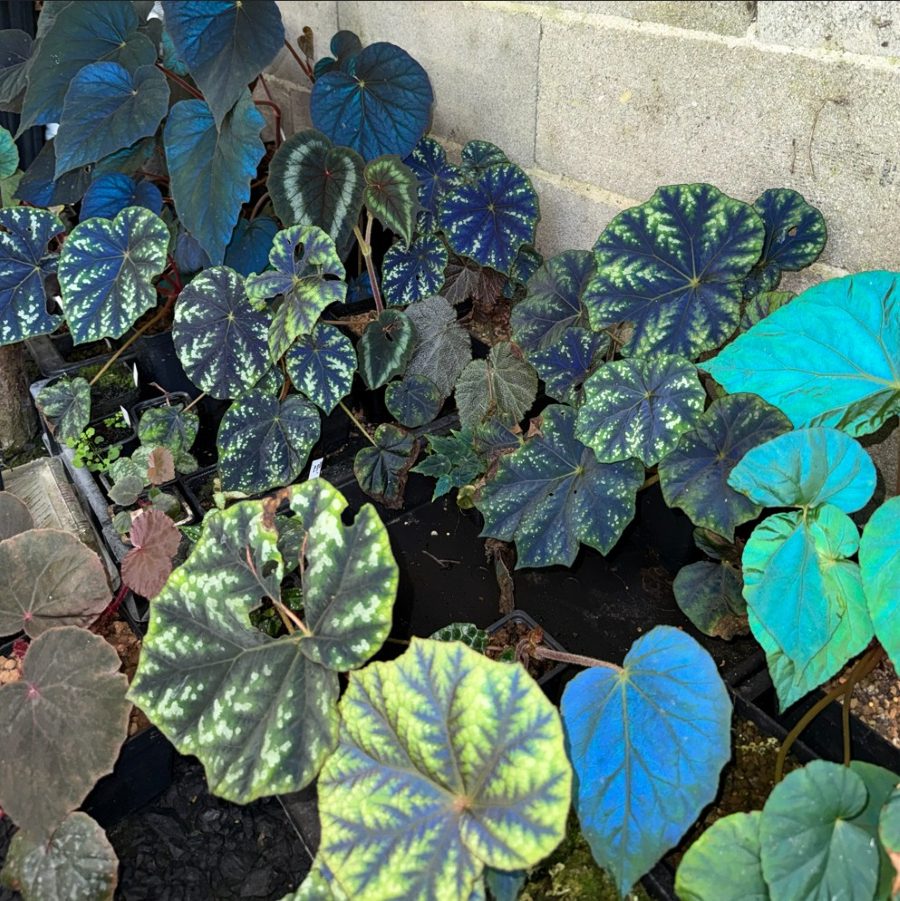
Shade specialists.
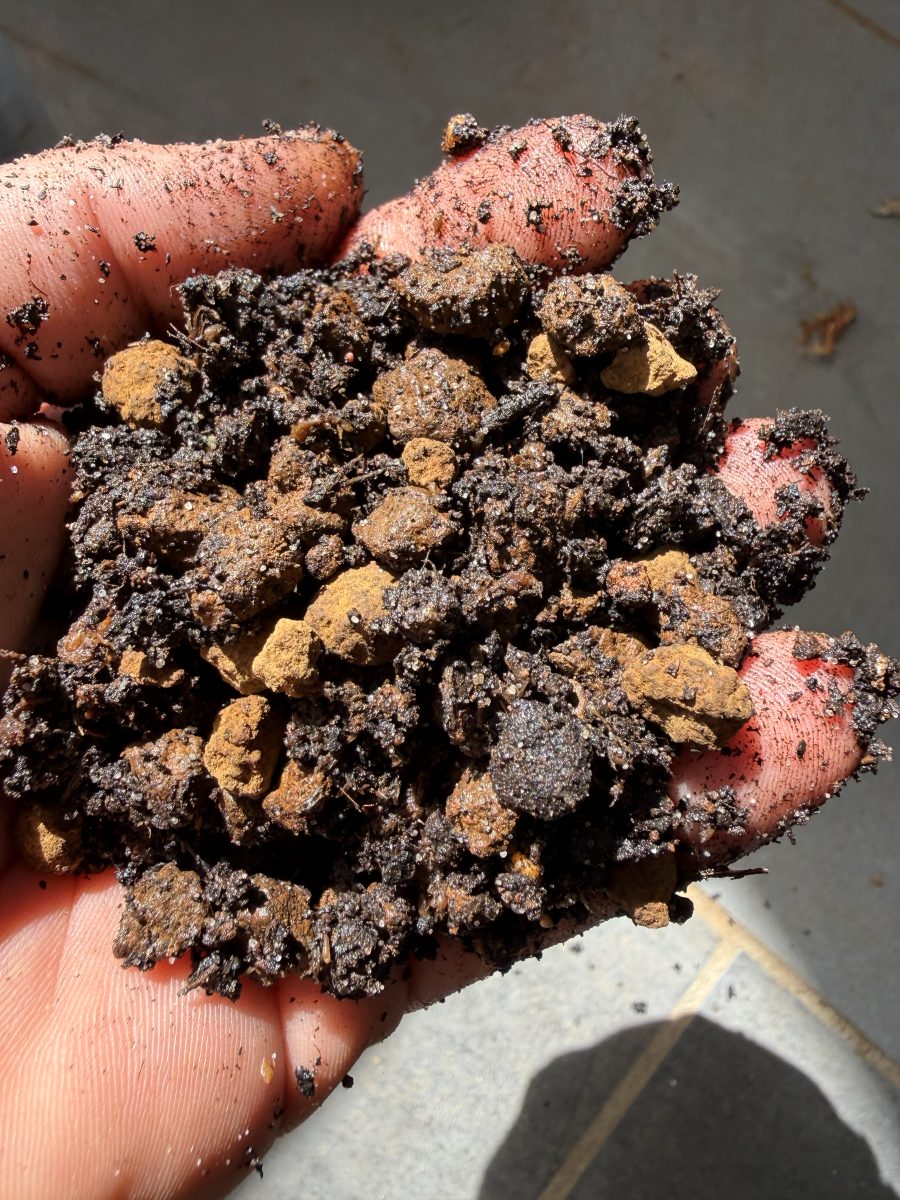
Mineral mix: akadama and potting soil.
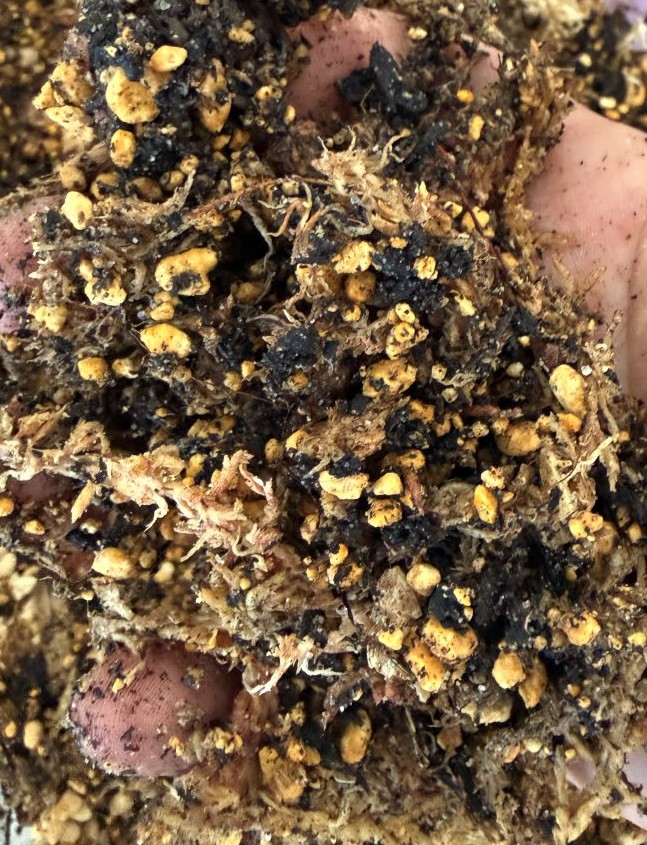
Understory mix: sphagnum, potting soil and kanuma.
We mainly use two mixes:
- Species from mineral soils (sections Coelocentrum, Platycentrum): a base of coarse akadama mixed with sterilised potting soil, about 60-70% akadama and 30-40% potting soil.
- Understory species (many species, especially section Petermannia from Borneo): a mix of dead sphagnum, sterilised potting soil and kanuma, about 50-60% sphagnum, 30% potting soil and 10-20% kanuma.
Humidity: depends on the species. Many grow in high humidity with a constantly moist substrate, while some, especially in section Coelocentrum, like the substrate to dry slightly and somewhat drier air, with variations.
Light: Begonia are shade specialists. Many species like fairly low, indirect light, usually between 200-400 and 1,500 lux; some need more. Adjust by watching growth and leaf formation.
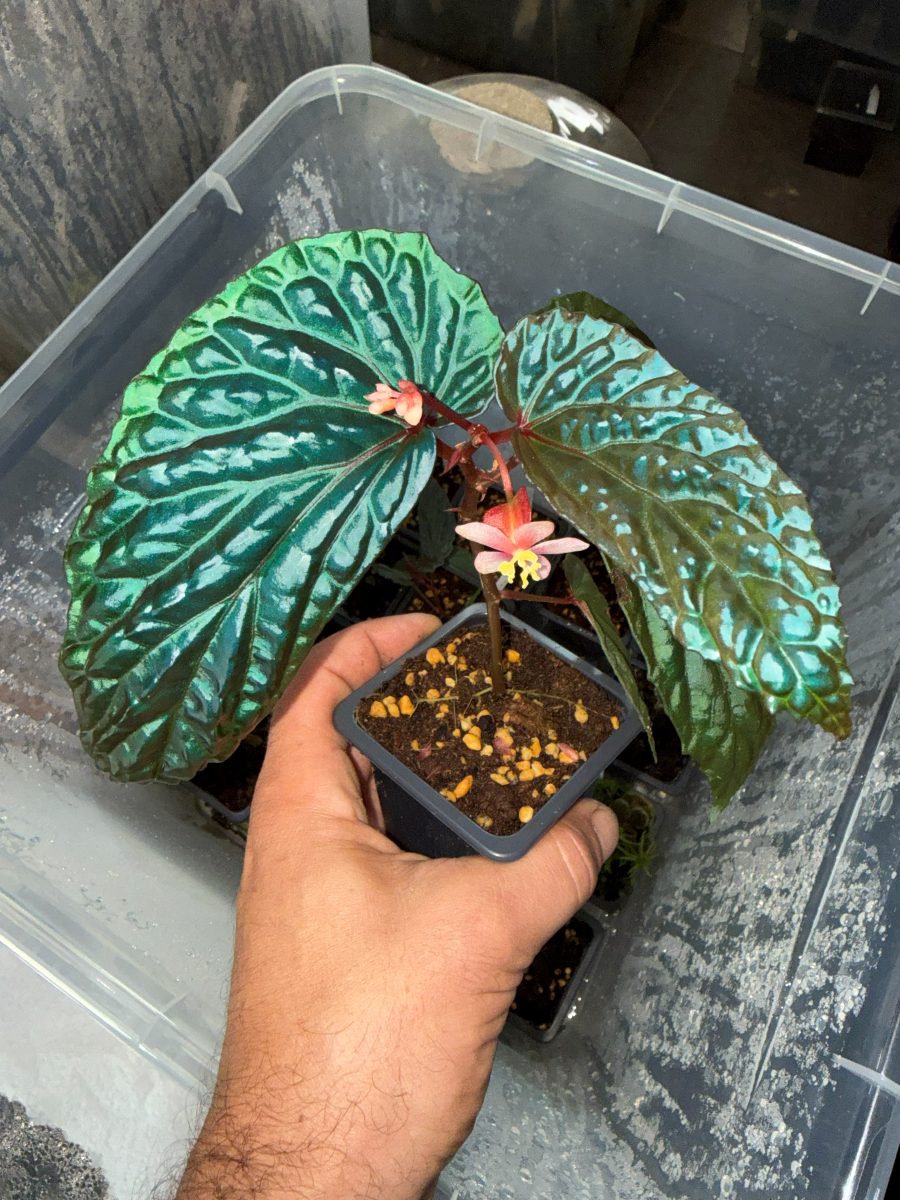
Begonia daunhitam grown in a box.
An exception: Begonia daunhitam grows well here in a mix of peat and sterilised potting soil with 20% kanuma; this mix also seems to suit Begonia darthvaderiana.
Feel free to try other substrate components, taking inspiration from nature or from other growers' successes. Our recipes work well for us, but many variations can work. Success comes from a subtle balance of factors (substrate, light, watering, humidity, temperature...): it remains essential to observe your plants and adapt your growing accordingly.
Emblemantha
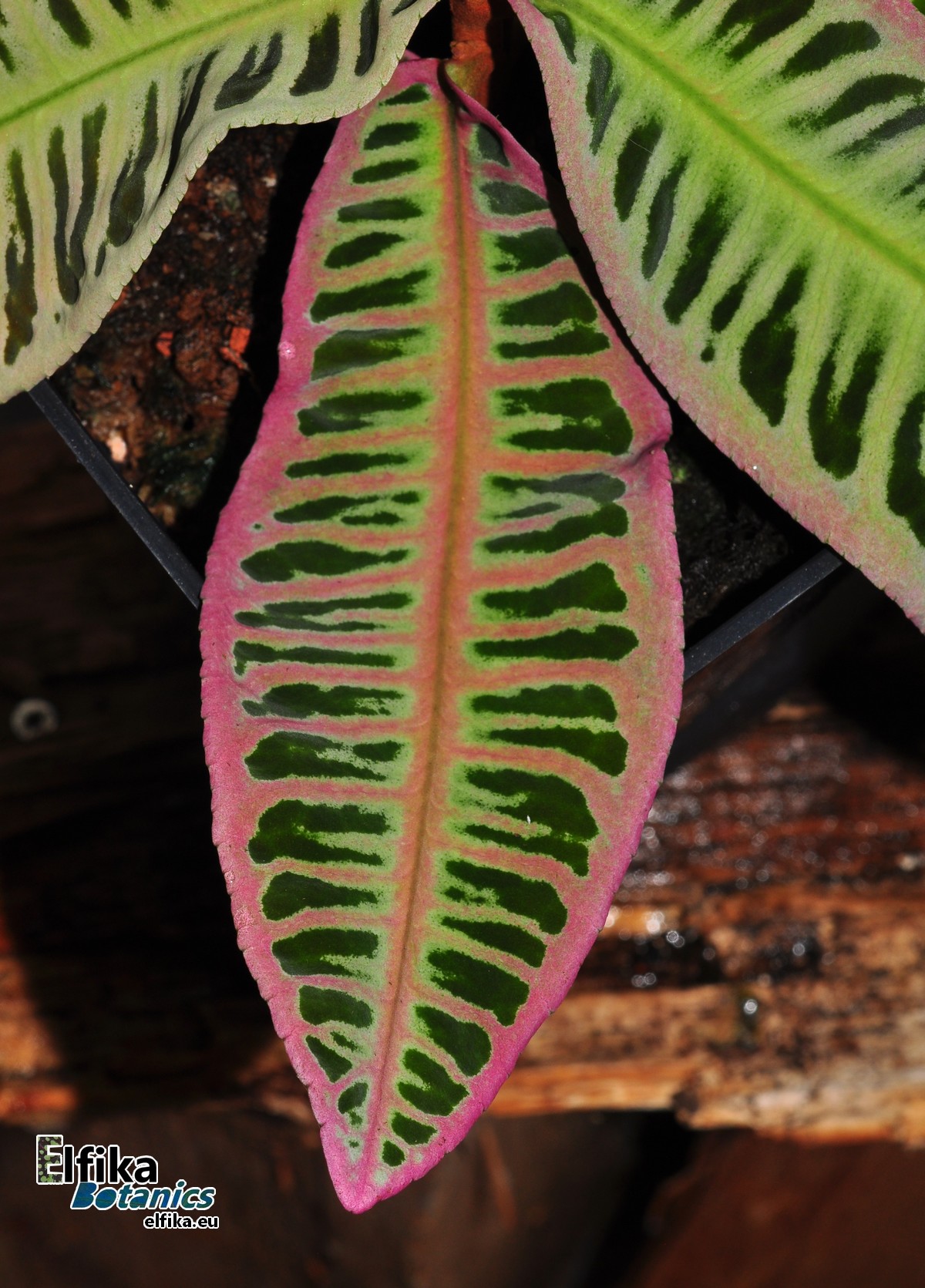
Grown much like understory Begonia: the same sphagnum, potting soil and kanuma mix in roughly the same proportions, preferably with high humidity and a substrate that stays moist.
Light: understory plants that cope with fairly low light, but they are adaptable and can take a little direct morning sun, staying in shade for most of the day. Allow 1,500 to 8,000 lux, depending on whether the light is artificial or natural.
Epiphytes
Platycerium: epiphytic ferns that like organic, rich, free-draining substrates with fairly high humidity, which can vary; for some species it is good to let the substrate dry between waterings. Light is usually bright, close to daylight; they tolerate shade, but this varies between species.
Lecanopteris and Drynaria: grown much like Platycerium, with an organic, free-draining, rich substrate and fairly high humidity. Some species come from high altitudes and appreciate a drop in temperature at night; this too varies between species, so look into their natural conditions and take inspiration from them.
Medinilla loranthoides: a very adaptable species from Réunion Island. As an epiphyte it likes a free-draining organic substrate and plenty of light. The substrate should stay moist most of the time, but it tolerates drying out a little. It does not tolerate temperatures below 10-12 °C.
Araucariaceae
Araucaria and Agathis: substrate components can vary quite a lot, but you need a rich organic part (potting soil) and porous draining components such as perlite, akadama or kanuma. For species from ultramafic or lateritic soils, include iron-bearing components (seramis, akadama). Cold hardiness depends on the species: check before trying to grow them outdoors.
Wollemia: equal parts potting soil and peat, plus 20% perlite or kanuma; a rich, slightly acidic substrate, kept fairly moist at all times, especially for young plants. Larger trees cope fairly well with drier periods. Wollemia is relatively cold-hardy, down to -10 or even -15 °C, so it can be grown outdoors in many regions.
Carnivorous plants
Drosera, Dionaea and Sarracenia: for many species a standard mix of peat with perlite or sand, about 50 / 50, works, but some have specific needs: very free-draining substrates for some, more organic sphagnum-based ones for others. They generally need very bright light, as they grow in very open areas, except Drosera of the prolifera / adelae / schizandra group, which prefer shade. Temperatures vary widely between species: look into each one to give it suitable conditions.
Cephalotus: 90% perlite and 10% peat, with 1-2 cm of peat on top. Bright light and constant moisture, but a very free-draining substrate for good root development.
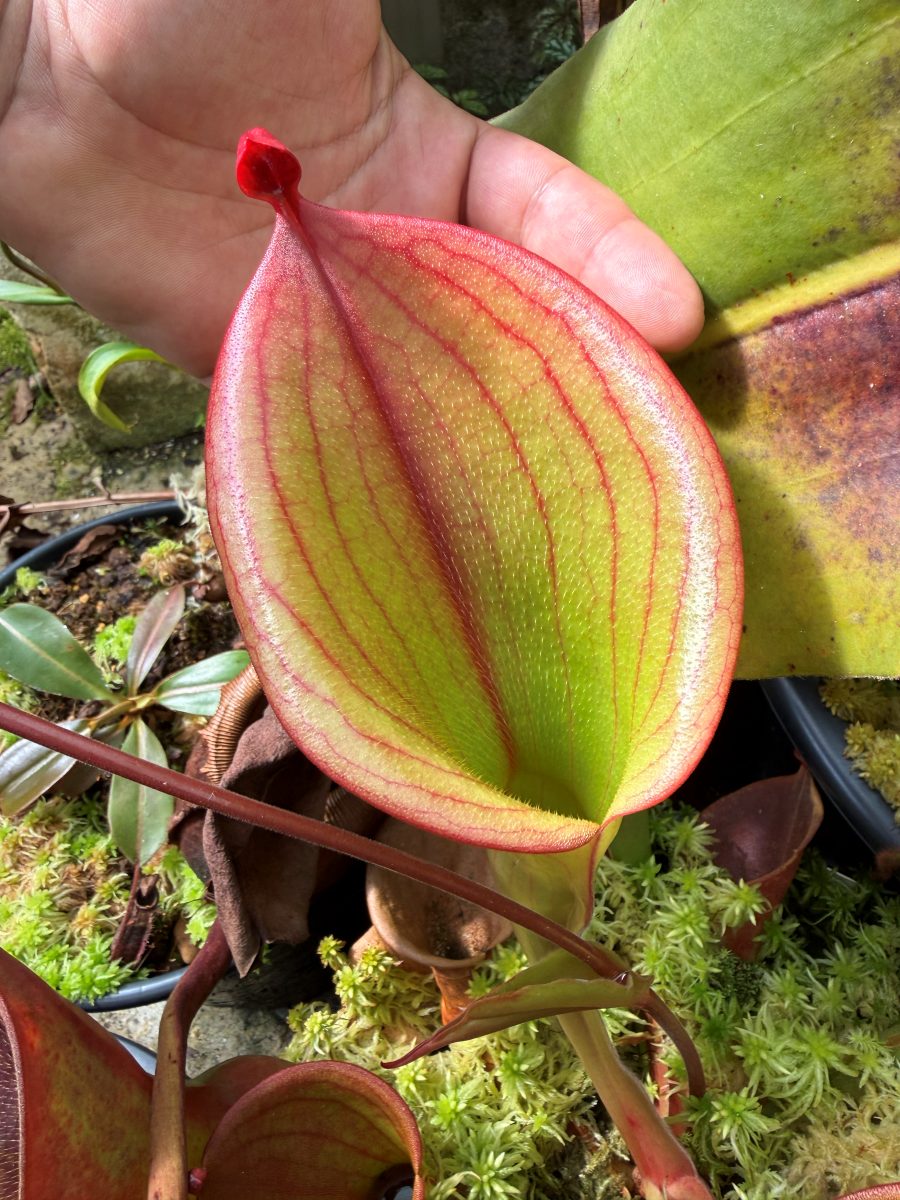
Heliamphora ionasi, live sphagnum on top.
Heliamphora: the same mix (90% perlite, 10% peat, 1-2 cm of peat on top) with live sphagnum. You can also add akadama, kanuma, sand or coco mulch: what matters is that the substrate stays very free-draining. They generally need maximum light; with too little, the species' features fade. Pots can stand in a few millimetres of water as long as their lower vents stay open and do their job. Being highland plants, most like 22 to 26 °C by day and 10 to 15 °C at night and cope well with seasonal changes. Temperatures can go outside these ranges, but beware of prolonged high heat, which disrupts growth.
Epiphytic Utricularia: U. cornigera in a mix of peat with perlite or sand; U. nelumbifolia and U. humboldtii rather in a sphagnum and perlite mix, with live sphagnum on top.
Nepenthes
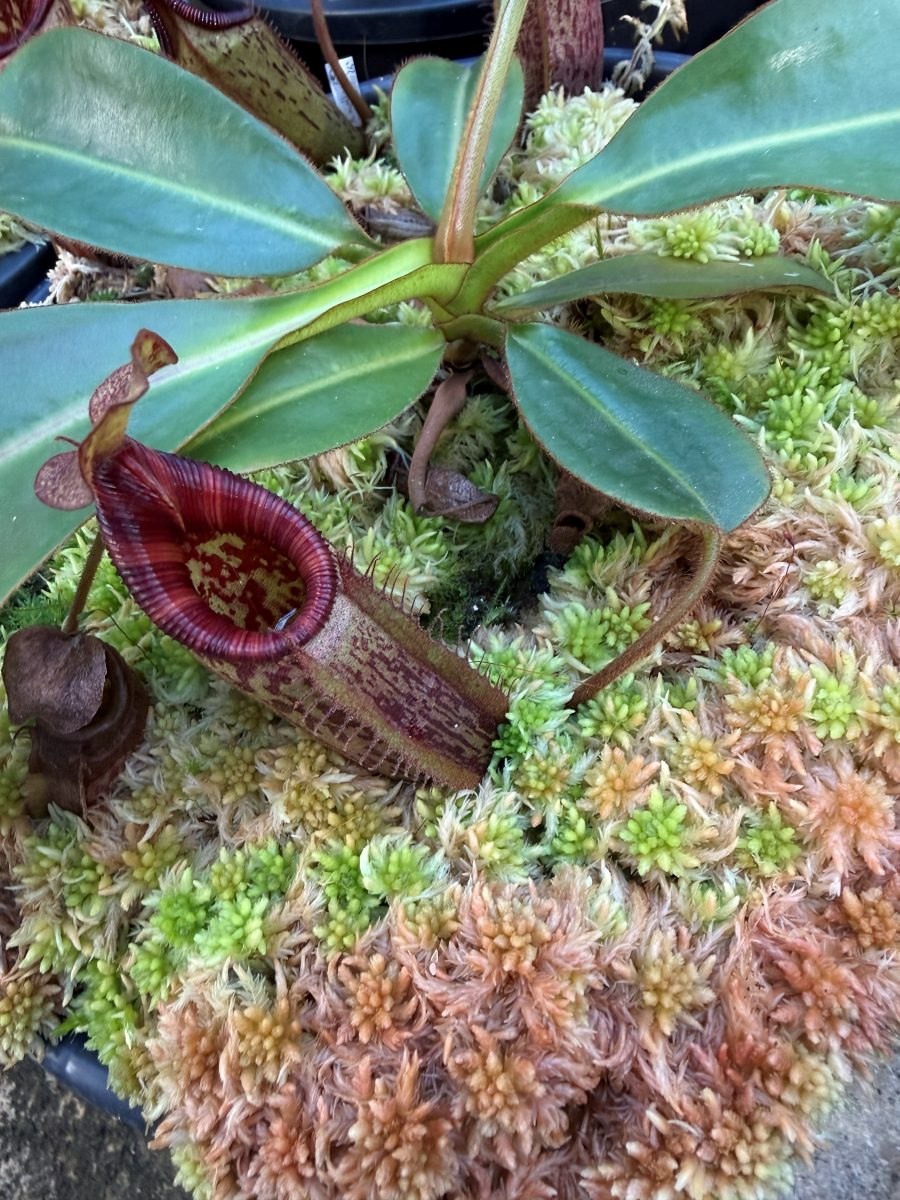
Nepenthes in cultivation, live sphagnum on top.
Temperatures: Nepenthes are usually divided by climate into lowland, intermediate and highland species. It is a practical division, but some species have variable tolerances: look into each species before growing it. Some cannot stand high heat, while some lowland species sometimes cope surprisingly well with temperatures lower than usually recommended. Hybrids are often tolerant.
Light: generally bright, with direct sun for part of the day, but this also varies: species from open habitats need more light than those from lightly wooded or shaded habitats.
Substrates: we divide them into three categories.
- Epiphytic species: a mainly organic substrate, usually 80% small coco chips (1-2 cm) and 20% kanuma.
- Species from rocky areas, very mineral habitats: rather 80% akadama and kanuma and 20% small coco chips.
- Species from intermediate habitats, with a balance of organic and mineral matter: a mix around 50 / 50.
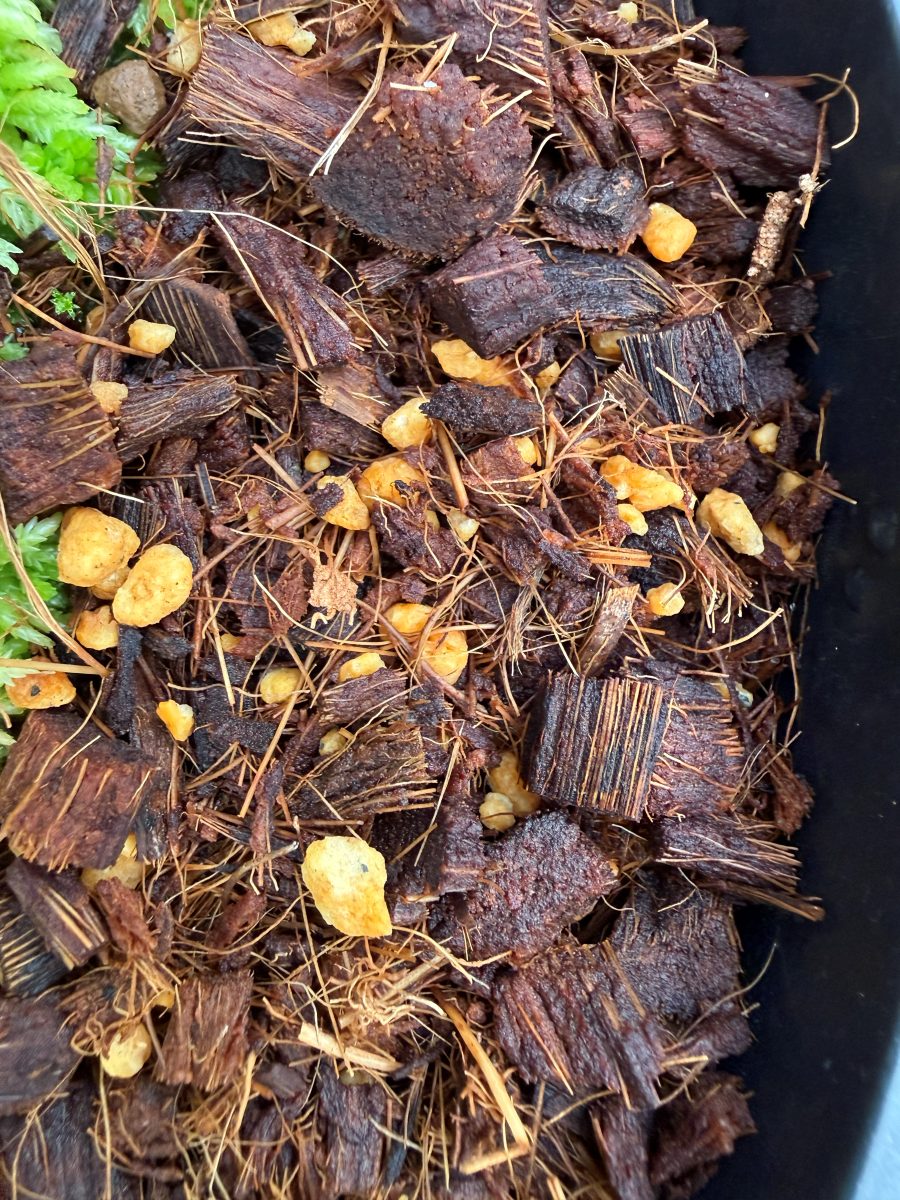
Epiphytes: coco chips and kanuma.
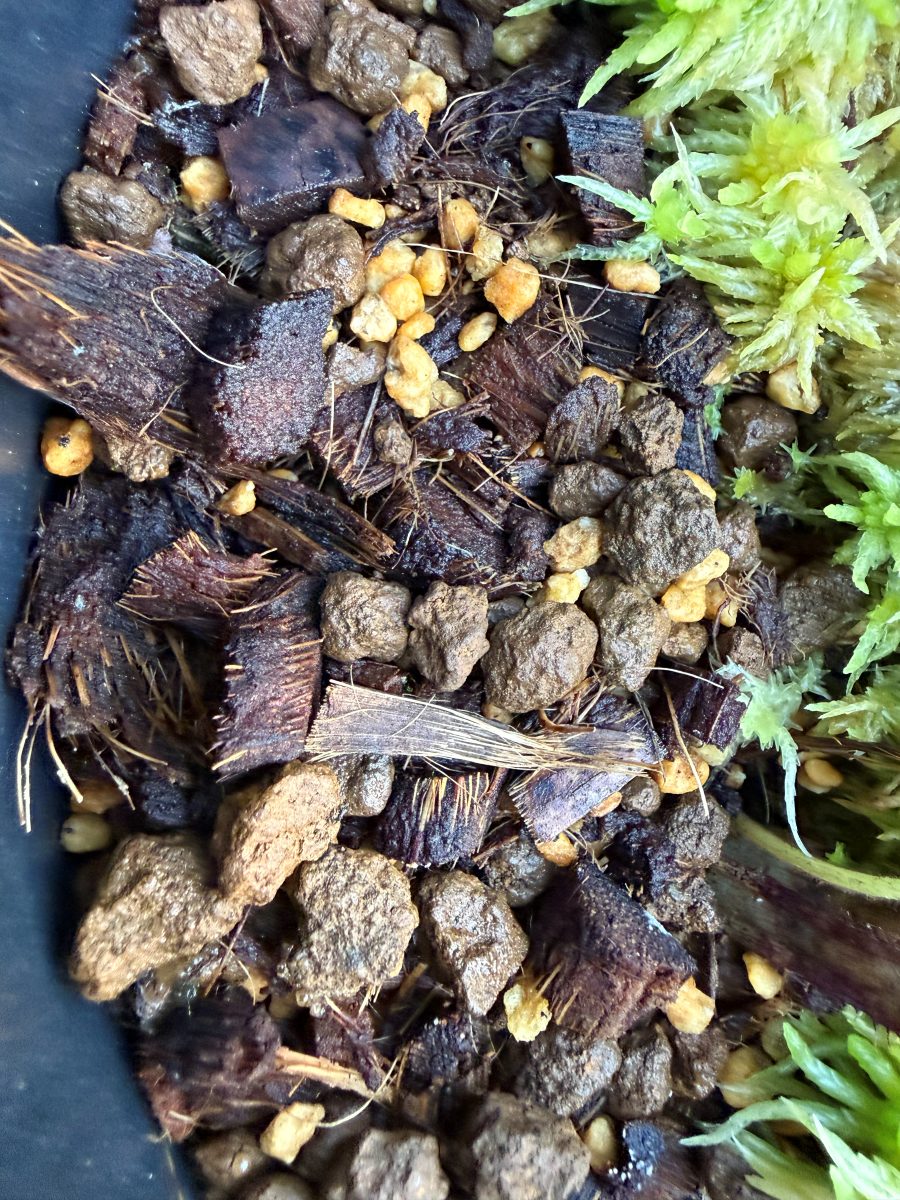
Intermediate habitats: organic and mineral.

Mineral mix (ultramafic species), well colonised by roots.
Proportions can of course vary; for hybrids, look at the parents' habitats to work out the proportions.
Humidity: Nepenthes generally grow in very humid habitats, but some species live in niches that dry out at times, especially epiphytes and species from limestone hills. In cultivation, high humidity is best, especially at night, with a fairly moist substrate. You can use a water reservoir while keeping the lower vents open: air must be able to circulate through the substrate.
Sphagnum and peat: often recommended for Nepenthes, but they break down fairly quickly and can become harmful once too degraded (pH and chemical composition change, which can damage the roots). If you use them, repot regularly, at least every two years.
Live sphagnum and top dressing
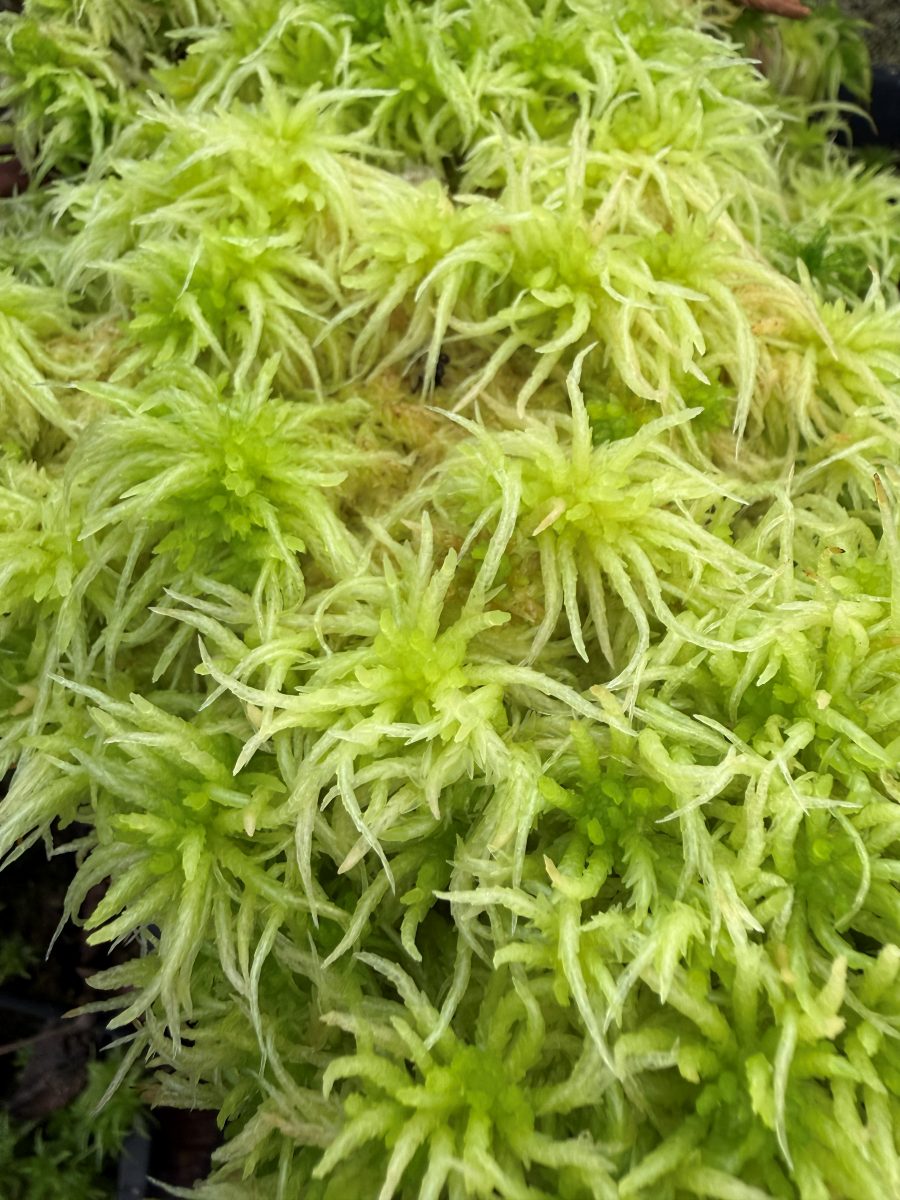
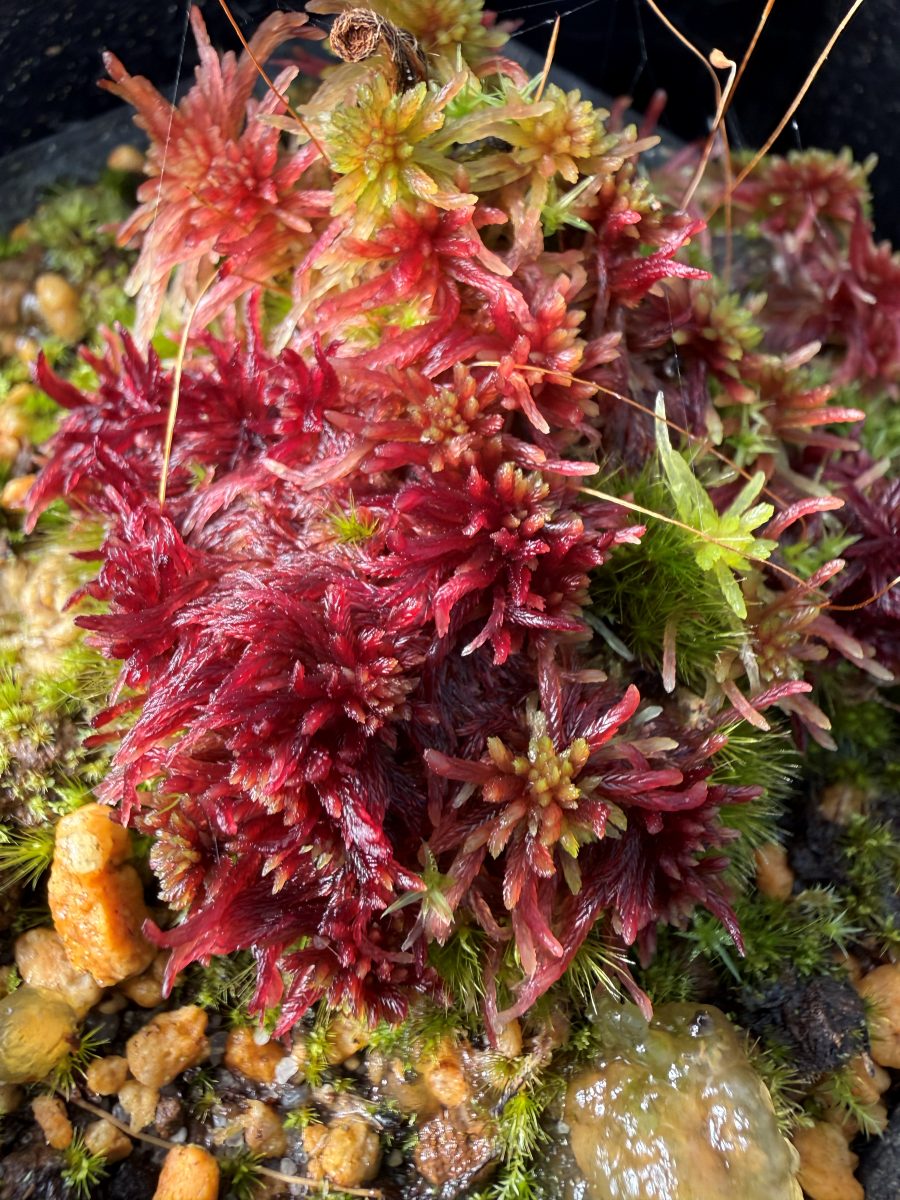
Many carnivorous plants live in or near sphagnum carpets. In cultivation, live sphagnum is almost a growing aid: it holds water, has antibacterial and antifungal properties, and interacts with the plants. It is also a good watering indicator: it turns pale when the substrate lacks water. We recommend it on the surface, in contact with the plants, for many Nepenthes, Heliamphora and some Drosera.
When the mix underneath is very free-draining and airy, a peat top dressing lets you grow sphagnum on it. For ultramafic species, an akadama top dressing is also a good watering indicator: it turns pale as the surface dries. For Drosera, a top dressing of pure sand prevents unwanted mosses and, if thick enough, sometimes Utricularia subulata, a rather invasive species in cultivation.
Nutrients and feeding
Plants need nutrients and trace elements. In nature, they come from decaying plant matter nearby and from what the wind brings; in a pot, they are quickly used up and washed out by watering. So it is important to provide them, as solid or liquid fertiliser. We mainly use a slow-release granular fertiliser (Osmocote 15-9-12+2Mg), easy to dose in the substrate.
- Begonia: cousins of the cucurbits (order Cucurbitales), they are very hungry plants. For a 6 x 6 cm pot, allow 6 to 10 granules every six months.
- Epiphytic ferns (Platycerium, Lecanopteris): in nature they are often associated with ants and benefit from their waste. In cultivation, feed them regularly.
- Carnivorous plants: they do come from very poor habitats, but there is always decaying plant matter and what the wind brings. Fertiliser is therefore often needed for proper growth, at low doses. For a young Nepenthes, we add 2 granules when repotting, close to the roots but not touching them. Once the pitchers are large enough, fully open and formed, 1 to 2 granules per pitcher boost growth.
- Heliamphora: no fertiliser in the pitchers, but 1 to 4 granules in the substrate when repotting, about 2 cm from the roots.
Whatever the type of fertiliser, start carefully with low doses and take time to watch the effect on growth. If you test the limits, do so gradually and carefully: overfeeding can cause lasting damage or even kill the plant.
Where to grow
Indoors, terrarium or grow tent, greenhouse or outdoors? Each species needs a suitable growing place:
- Outdoors: some species can be grown outside all year round, depending on your local climate.
- Terrarium or grow tent: a controlled environment that reaches the required humidity and keeps temperature in check, with or without artificial lighting depending on each species' needs.
- Greenhouse: something like the luxury version of a terrarium, with natural light, but you also have to manage seasonal changes in temperature and humidity, ventilation and so on.
Each way of growing has its challenges: feel free to ask us for advice based on your plans and possibilities.
A question about a plant? Feel free to contact us if you need information on growing the species or hybrids you are thinking of ordering: we are always happy to advise you from our experience.